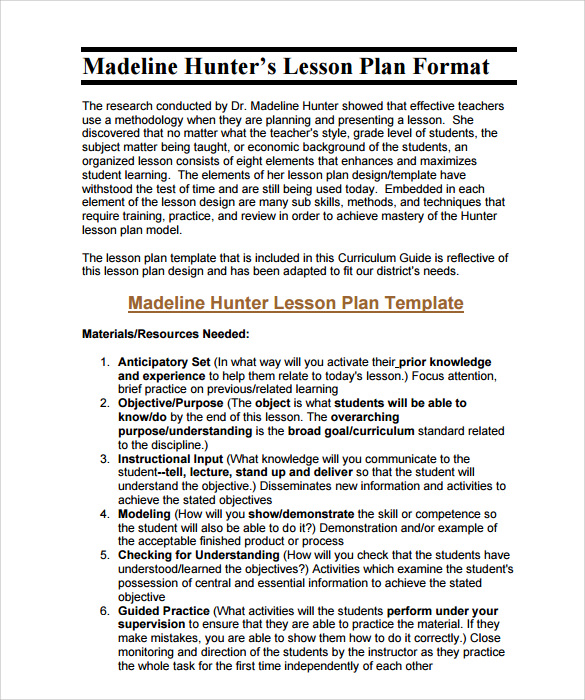
Crafting a well-structured and effective lesson is the cornerstone of successful teaching, and having the right tools can make all the difference. For educators seeking a proven framework to enhance student learning and streamline their planning process, a Madeline Hunter Lesson Plan Blank Template is an invaluable resource. This model, rooted in decades of educational research, provides a clear, sequential structure for delivering instruction that ensures all critical components of learning are addressed. It moves beyond a simple checklist of activities, encouraging teachers to be intentional decision-makers who purposefully guide students from initial engagement to independent mastery.
The lesson design model was developed by Dr. Madeline Hunter, a renowned American educator whose work at UCLA in the 1970s and 80s revolutionized instructional practices. Her goal was not to create a rigid, one-size-fits-all script for teachers to follow, but rather to provide a research-based framework for effective instruction. Hunter identified key elements that, when consciously applied, significantly increase the probability of learning. This approach, often associated with "direct instruction" or "mastery teaching," emphasizes clarity, modeling, and continuous feedback to ensure students truly understand and can apply new concepts and skills.
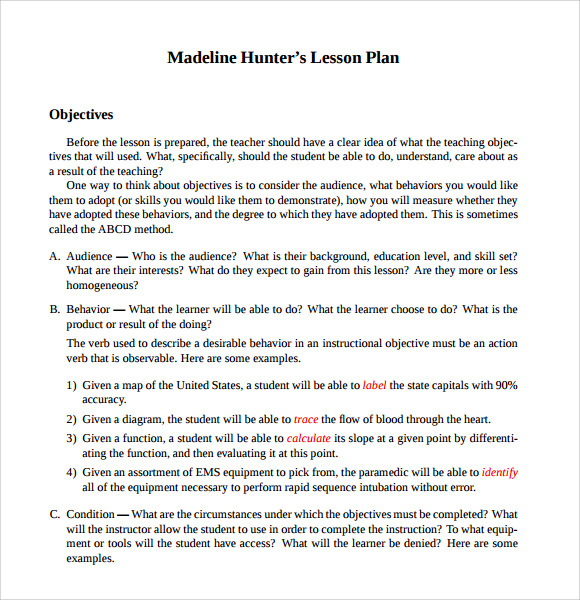
By understanding and utilizing the components of the Hunter model, teachers can transform their planning from a routine task into a strategic process. This article will serve as a comprehensive guide to the Madeline Hunter lesson design, breaking down its seven essential elements in detail. We will explore the profound benefits of using a structured template for daily planning and provide practical tips on how to effectively use and customize it for your unique classroom needs. Most importantly, you will have access to a free, downloadable template to help you immediately implement this powerful instructional strategy.

What is the Madeline Hunter Lesson Plan Model?
The Madeline Hunter Lesson Plan Model, also known as Mastery Teaching or the Seven-Step Lesson Plan, is an instructional framework designed to make the teaching process more effective and the learning process more successful. It is not a rigid prescription for every lesson, but rather a guide for a teacher's decision-making process before, during, and after instruction. Dr. Hunter's research focused on identifying the universal elements present in effective lessons, regardless of the subject matter or grade level.
The core philosophy behind the model is that teaching is a science with a structured sequence of elements that can be learned, practiced, and mastered. By consciously including these elements in their lessons, teachers can create a clear and logical path for student learning. The framework is particularly powerful for teaching specific skills or concepts that require a clear demonstration and guided practice. It ensures that students are properly prepared to learn, are shown exactly what to do, and are given ample opportunity to practice with support before being asked to perform independently.
It's crucial to understand that the Hunter model is a tool for thinking about lesson design, not a mandate. An effective teacher using this framework doesn't robotically check off each of the seven steps in every single 45-minute period. Instead, they understand the purpose of each element and strategically decide which ones are necessary for a particular lesson's objective. A complex, multi-day lesson might see some elements repeated, while others might be the focus of an entire class period. The true power of the model lies in its ability to make a teacher more deliberate and purposeful in their instructional choices.
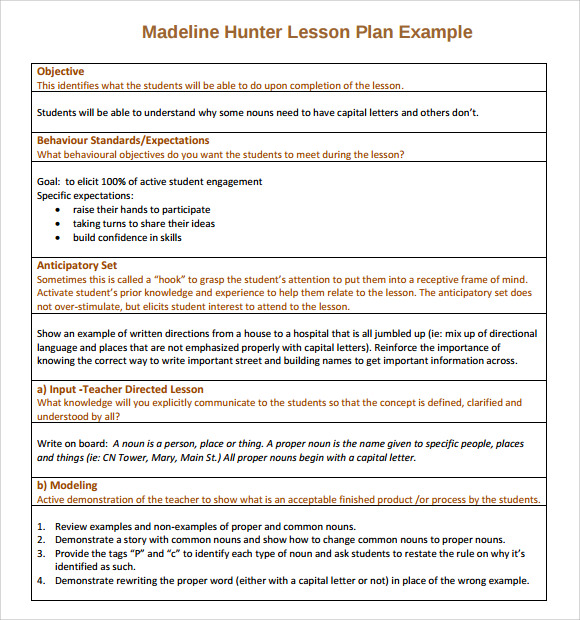
The 7 Essential Elements of Madeline Hunter's Lesson Design
The Madeline Hunter model is most famous for its seven distinct elements that create a cohesive and comprehensive learning experience. Understanding the purpose of each step is key to using the framework effectively.
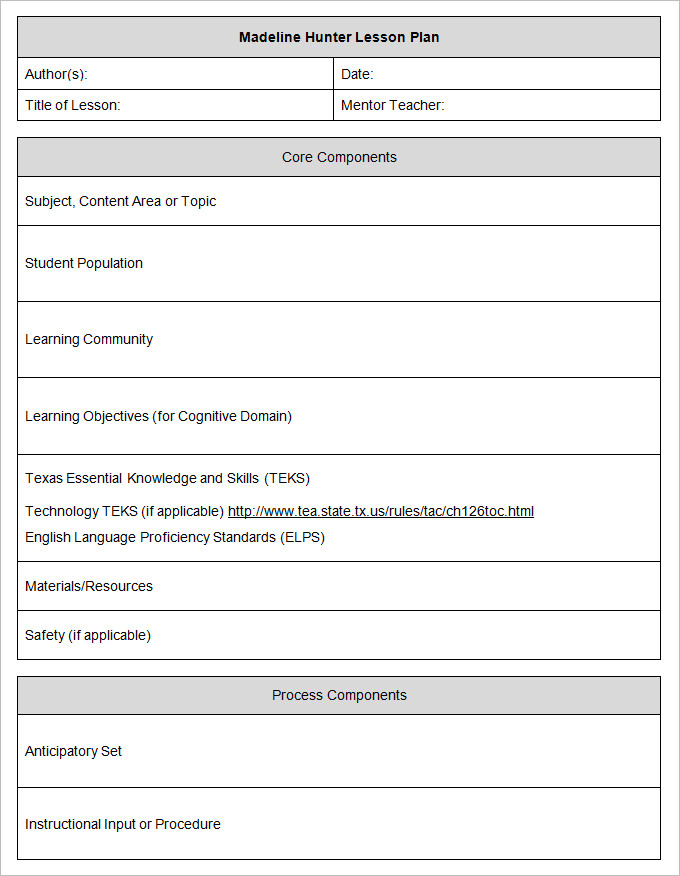
1. Anticipatory Set (The "Hook")
The anticipatory set is a short activity at the beginning of a lesson designed to grab students' attention and engage them in the topic. Its purpose is threefold: to focus the students on the upcoming lesson, to activate their prior knowledge related to the topic, and to create a connection between what they already know and what they are about to learn. A good anticipatory set is brief, engaging, and directly relevant to the lesson's objective. Examples include a thought-provoking question, a short and compelling video clip, a quick turn-and-talk activity, a real-world problem, or a brief review game.

2. Objective and Purpose (The "Why")
In this step, the teacher clearly communicates to the students what they will be able to do by the end of the lesson (the objective) and why it is important for them to learn it (the purpose). The objective should be stated in clear, student-friendly language and be measurable. For instance, instead of saying "We will learn about fractions," a better objective is "You will be able to correctly identify the numerator and denominator in three different fractions." Stating the purpose answers the common student question, "Why do we need to learn this?" Connecting the lesson to real-world applications or future learning increases student motivation and buy-in.

3. Input (The "What")
The input phase is where the teacher provides the new information, concepts, or skills that are necessary for students to achieve the lesson's objective. This is the core content delivery part of the lesson. The teacher must carefully select and sequence the information to be presented. The methods of delivery can vary widely and should be chosen based on the content and the students' needs. Input can include a lecture, a demonstration, reading a text, showing a video, using diagrams, or a combination of these and other strategies. The key is to present the new knowledge clearly and concisely.
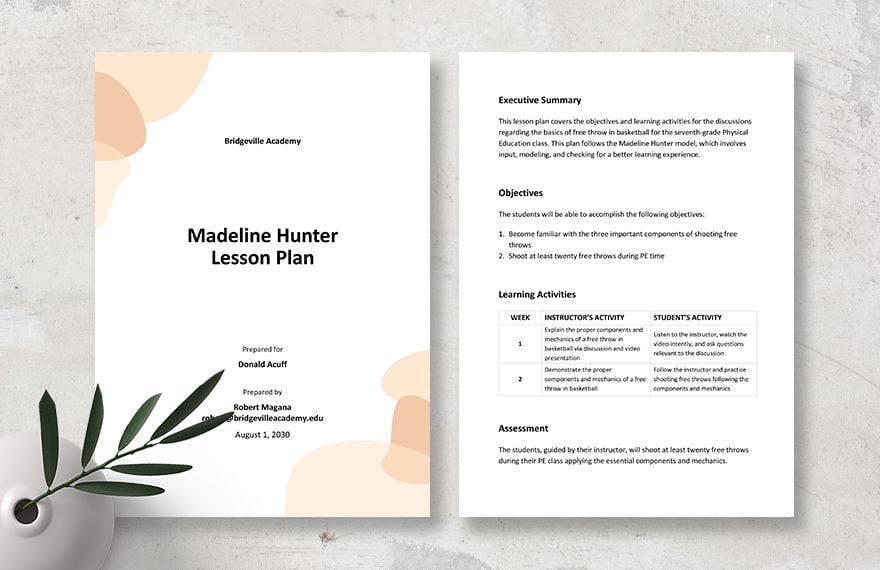
4. Modeling (The "How")
Modeling is one of the most critical steps in the Hunter model. Here, the teacher demonstrates the skill or process exactly as the students are expected to perform it. This is the "I do" phase of the lesson. Effective modeling involves the teacher not only showing the steps but also thinking aloud, verbalizing their thought process, and explaining the reasoning behind their actions. This makes the often-invisible thinking process of an expert visible to the novice learner. For example, when teaching how to solve a math problem, a teacher would write out the steps on the board while explaining why they are taking each step.

5. Checking for Understanding (The "Gauge")
This is not a single step but an ongoing process that occurs throughout the entire lesson. The teacher must continuously monitor whether students are grasping the new concepts and skills. Checking for understanding allows the teacher to make real-time adjustments to their instruction, providing clarification or re-teaching as needed. This prevents students from being left behind. Techniques can range from asking targeted questions to the whole group, having students use mini-whiteboards to show their answers, using thumbs-up/thumbs-down signals, or observing students as they work.

6. Guided Practice (The "We Do")
During guided practice, students get their first opportunity to practice the new skill with the direct supervision and support of the teacher. This is the crucial "we do it together" phase. The goal is to provide a safe, supported environment where students can try the new skill, make mistakes, and receive immediate corrective feedback. This step helps bridge the gap between teacher modeling and independent work. Activities during guided practice might involve students working through problems as a class, collaborating in pairs or small groups, or starting on an assignment while the teacher circulates and offers assistance.
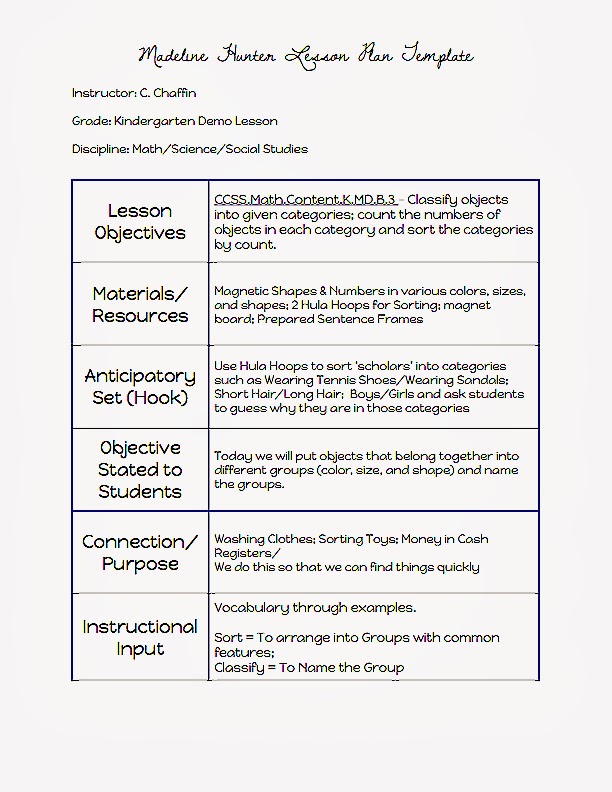
7. Independent Practice (The "You Do")
The final step is independent practice, where students apply the new skill or knowledge on their own, without direct assistance from the teacher. This is the "you do" phase. The purpose of independent practice is to build fluency, automaticity, and long-term retention. It is important that this step is assigned only after the teacher is confident, through checking for understanding and observing guided practice, that students are ready to work independently. This practice could take the form of homework, in-class worksheets, or a project.

Benefits of Using a Structured Lesson Plan Template
For busy educators juggling countless responsibilities, a structured lesson plan template is more than just an organizational tool; it's a professional practice that yields significant benefits for both the teacher and the students.

First and foremost, using a template like the Madeline Hunter model promotes instructional clarity and intentionality. It forces the teacher to think through every stage of the learning process, from capturing students' interest to ensuring they can apply the knowledge independently. This deliberate planning ensures that lessons have a clear objective, a logical flow, and that all necessary components for effective learning are included.

Secondly, a template saves valuable time and mental energy. Instead of starting from a blank page for every lesson, teachers have a reliable framework to guide their thinking. This reduces the cognitive load of planning, allowing educators to focus their creativity on developing engaging activities and differentiating instruction rather than worrying about the basic structure of the lesson. Over time, the process becomes more efficient and less stressful.

Finally, structured lesson plans are essential for collaboration, reflection, and continuity. When teachers in a department or grade level use a common template, it becomes easier to share resources, co-plan lessons, and discuss instructional strategies. The template also serves as a powerful tool for self-reflection, allowing a teacher to look back on a lesson and analyze what worked and what could be improved. Furthermore, a detailed lesson plan is invaluable for substitute teachers, ensuring that student learning can continue seamlessly even in the teacher's absence.

How to Use Your Madeline Hunter Lesson Plan Blank Template
Once you have your Madeline Hunter Lesson Plan Blank Template, using it effectively involves thoughtfully considering each section as it relates to your specific students and learning goals. Think of it as a roadmap for your lesson, not a rigid script.

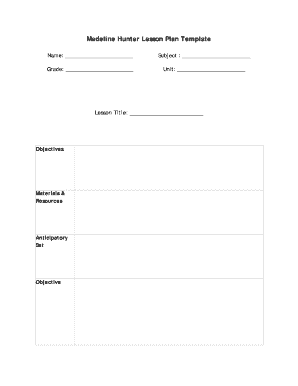
Start by filling in the basics: the lesson title, subject, grade level, and date. Then, move to the core of the plan.
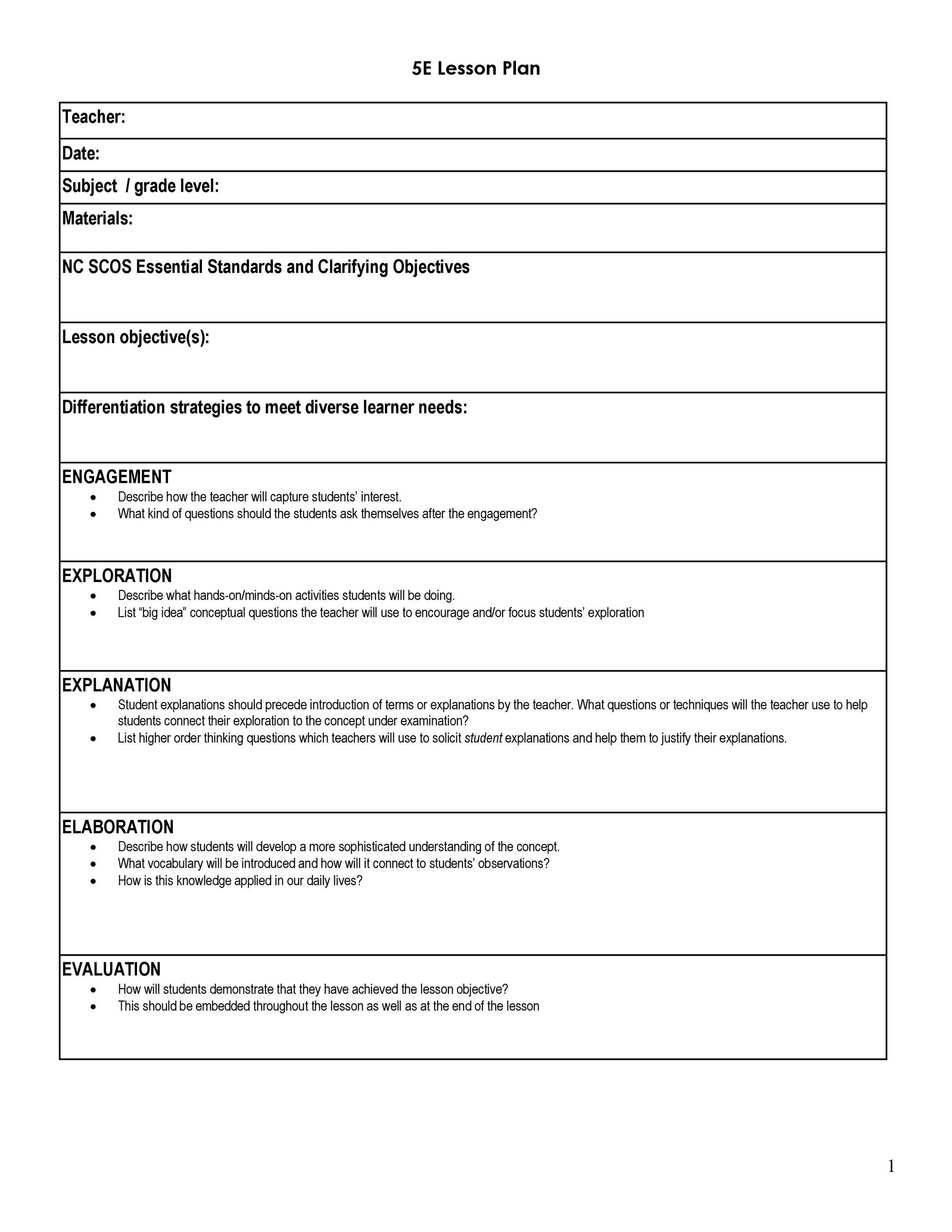
Objective and Purpose: Begin with the end in mind. What, specifically, must students be able to do by the end of this lesson? Write a clear, measurable objective. Then, articulate the purpose. How will this skill help them in this class, other classes, or the real world? Writing this down solidifies the lesson's importance for you and for your students.
Anticipatory Set: Brainstorm a quick, high-engagement activity. How can you connect today's lesson to yesterday's? Is there a surprising fact, a quick video, or a challenging question you can pose to pique their curiosity? Keep it short—typically 2-5 minutes.
Input & Modeling: This is the "I do" section. Outline the key information you need to deliver. What vocabulary is essential? What are the step-by-step procedures you will demonstrate? Write down key phrases or questions you'll use during your think-aloud to make your thought process transparent.
Checking for Understanding: Plan your checkpoints. Where in the lesson will you pause to gauge comprehension? List the specific questions you will ask or the quick assessment method you will use (e.g., "Ask 3 students to define 'photosynthesis' in their own words," or "Students will solve problem #2 on their whiteboards.").
Guided Practice: Describe the "we do" activity. How will students practice with your support? Will they work in pairs on a worksheet while you circulate? Will you work through a problem together on the board, calling on students to provide the next step? Be specific about your role and the students' roles.
Independent Practice: Detail the "you do" assignment. What task will students complete to prove their mastery of the objective? Ensure this task directly aligns with the objective and the skills practiced during the guided portion.

Customizing Your Template
Your Madeline Hunter Lesson Plan Blank Template is a starting point. Feel free to adapt it to your needs. You might add sections for:
* Materials: A checklist of everything you'll need for the lesson.
* Differentiation: Specific strategies you'll use to support struggling learners and challenge advanced students.
* Standards: The specific state or national learning standards the lesson addresses.
* Assessment: How you will formally or informally assess student mastery of the objective (e.g., exit ticket, quiz, observation checklist).
Download Your Free Printable and Digital Template
To help you get started with this effective instructional framework, we are providing a free Madeline Hunter Lesson Plan Blank Template in multiple formats. Whether you prefer to plan digitally or with pen and paper, we have an option for you.
Using a pre-formatted template ensures you consider each of the seven crucial steps in your planning process, leading to more coherent and effective lessons. These templates are designed to be clean, easy to use, and fully customizable.
- Printable PDF Version: Perfect for educators who enjoy planning by hand. Simply download the PDF, print as many copies as you need, and place them in a planning binder. This format is great for quick notes and in-the-moment adjustments.
- Editable Google Docs Version: Ideal for digital planning and collaboration. Access your lesson plans from any device, easily share them with colleagues or administrators, and link directly to online resources, videos, and digital activities within the document.
- Editable Microsoft Word Version: A classic and versatile option for those who prefer to work within the Microsoft Office suite. Download the file and easily customize the tables, fonts, and sections to perfectly fit your planning style.
Click the link below to access and download the format that works best for you.
[Link to Downloadable Templates Here]
Common Misconceptions About the Hunter Model
Despite its widespread use and research backing, several common misconceptions about the Madeline Hunter model persist. Addressing these can help educators implement the framework with greater fidelity and flexibility.
One major misconception is that the model is too rigid and stifles teacher creativity. Critics sometimes view the seven steps as a restrictive checklist that leads to cookie-cutter lessons. However, this interpretation misses the point. The framework provides the "skeleton" of an effective lesson, but the teacher provides the "flesh"—the creative activities, engaging content, and unique personality that bring the lesson to life. The model dictates the essential components of learning, not the specific method of delivery.
Another misunderstanding is that the model is only suitable for direct instruction of basic skills. While it is exceptionally effective for that purpose, its underlying principles are applicable across many teaching methodologies. The core ideas of activating prior knowledge (anticipatory set), being clear about goals (objective), demonstrating processes (modeling), and checking for understanding are good teaching practices in any context, including project-based or inquiry-based learning.
Finally, many believe that every lesson must contain all seven steps in a fixed order. Dr. Hunter herself repeatedly stated that this was not the case. The seven elements represent a complete cycle of learning, which may take place over several days. One day's lesson might focus heavily on input and modeling, while the next day is dedicated almost entirely to guided and independent practice. The effective teacher uses the model as a diagnostic tool, selecting the elements needed for a specific learning objective at a specific time.
Conclusion
The Madeline Hunter Lesson Plan model has endured for decades for one simple reason: it works. By providing a research-based, logical framework for instruction, it empowers teachers to be more purposeful and effective in their craft. It transforms lesson planning from a chore into a strategic process focused on a clear path to student mastery. The seven elements—from the initial hook of the anticipatory set to the culminating application in independent practice—ensure that no critical component of the learning process is left to chance.
Using a Madeline Hunter Lesson Plan Blank Template is a practical first step toward implementing this powerful methodology. It streamlines the planning process, fosters instructional consistency, and provides a clear document for reflection and collaboration. By thoughtfully planning each step, teachers can increase student engagement, deepen understanding, and ultimately improve academic outcomes. We encourage you to download the free template, adapt it to your classroom, and discover the clarity and confidence that comes from a well-structured lesson.
0 Response to "Free Madeline Hunter Lesson Plan Blank Template"
Posting Komentar